Accessibility platform
Remembr
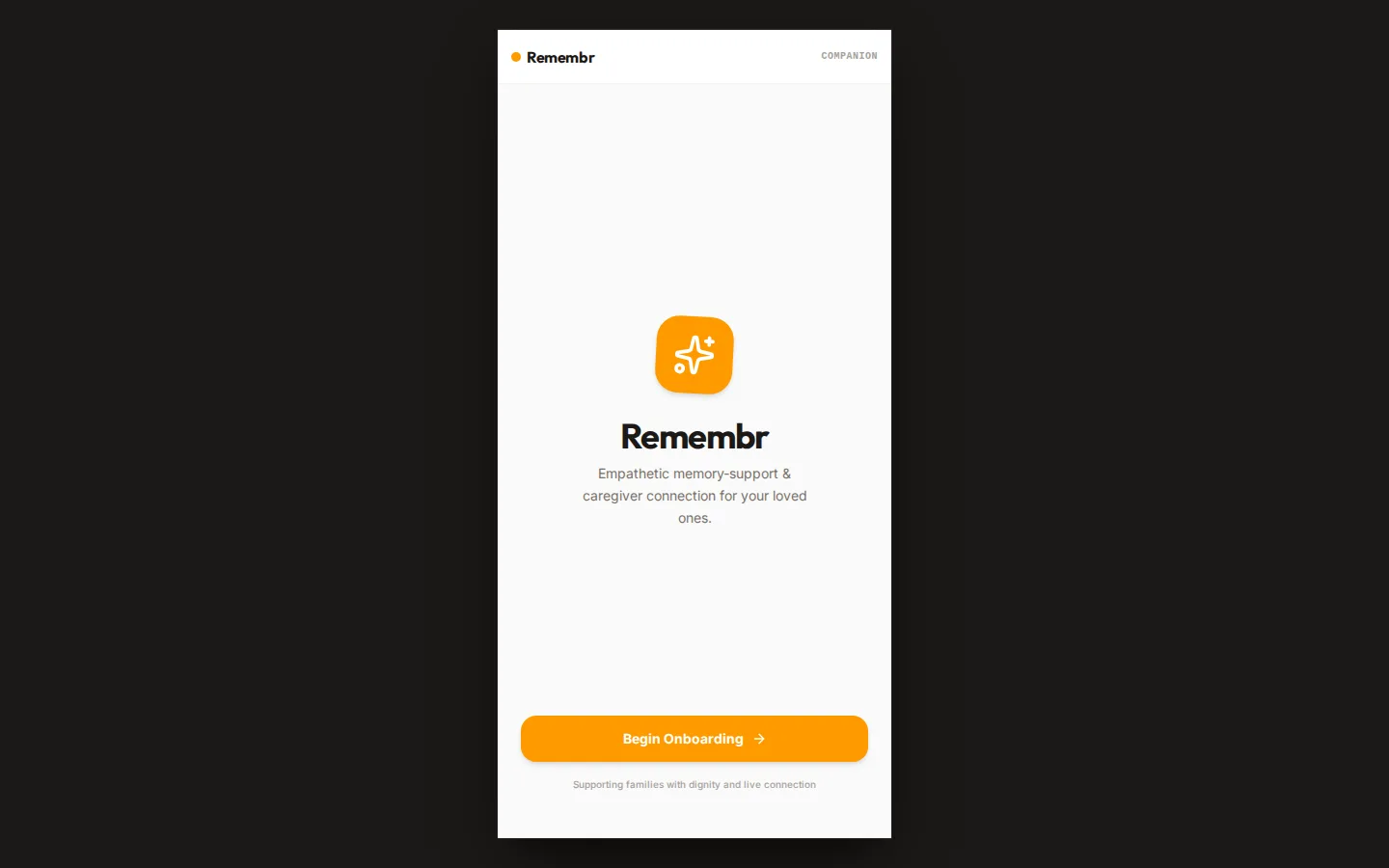
Dignified independence for seniors living with memory loss, and peace of mind for their family caregivers.
Hosted on a free tier, so the first load can take up to a minute to wake up. Subsequent loads are fast.
- Role
- Full-stack engineer - product architecture, accessibility, multilingual voice
- Stack
- ReactTypeScriptExpressSupabaseGemini AI
- The problem
- As our loved ones age, simple daily routines like taking medications on time, staying on schedule, or finding the way home become overwhelming. Cluttered smartphone screens with tiny text and complex menus create constant frustration. At the same time, family caregivers face a stressful balancing act: they worry about an aging parent's safety, location, and daily well-being while managing their own busy lives.
- The constraint
- The system had to support seniors respectfully without stripping away their independence. It had to eliminate all technology barriers (no passwords or tiny buttons), deliver audio in five Nigerian languages, and keep caregivers updated in real time even on weak mobile connections.
- The approach
- I built a two-part platform: a high-contrast, voice-guided senior tablet portal and a live web dashboard for caregivers. The senior device pairs once with a six-digit code and requires zero passwords. It features spoken reminders, photo-based contacts that speak familiar family greetings, and turn-by-turn guidance home in English, Hausa, Igbo, Yoruba, and Pidgin using Gemini AI with automatic fallback.
- The result
- Deployed live on Render at remembr.onrender.com. Delivers real-time caregiver monitoring, spoken medication schedules, location-aware navigation, and an emergency SOS button. Built for Nigeria's 3MTT initiative.
What the platform does
Remembr bridges the gap between aging seniors and their families through two connected portals: a simplified, high-contrast mobile interface designed specifically for seniors, and a real-time management dashboard for family caregivers.
The problem it solves
Normal smartphones and apps are built for tech-savvy users. They are packed with small text, confusing menus, and passwords that create anxiety for older adults trying to manage daily routines like taking pills or finding their way home.
Meanwhile, family caregivers carry constant worry about their parents’ safety, location, and health, struggling to stay connected without taking away their loved one’s independence. Remembr solves both sides: seniors get an easy, respectful interface that guides them through each day, while family members get live visibility and instant alerts.
What is interesting here
Spoken voice guidance in five languages. Guidance and reminders are spoken out loud in English, Hausa, Igbo, Yoruba, and Nigerian Pidgin. Seniors never have to squint at small text; they hear calm audio directions in their native language.
AI voice generation with instant fallback. Text-to-speech runs through Google Gemini AI with automatic failover to Mistral AI and the browser Web Speech API. If an AI service has a temporary outage, the app switches to the backup provider automatically so the user never gets stuck with broken silence.
Photo contacts with familiar family voices. Instead of a confusing list of phone numbers, seniors see clear photos of their family. Tapping any photo plays a warm, familiar recorded introduction (such as “This is your son, Chidi”), reducing confusion and anxiety.
Navigation support and one-tap emergency SOS. Built-in “Where Am I?” and “Show Me Home” features speak the senior’s current location and provide simple directions back home. In an emergency, a large SOS button immediately alerts the caregiver and allows coordinating a safe ride.
Zero password frustration. The senior device links once to the caregiver dashboard using a six-digit pairing code. Seniors never have to remember a username, password, or PIN number.
Real-time caregiver dashboard. Caregivers remotely manage daily routines, schedule medication reminders, view live location updates, and monitor activity logs from any web browser using Supabase and Express.
Why it is a flagship
It shows the deepest side of engineering: understanding human vulnerability and building software that restores dignity, independence, and peace of mind. Built for Nigeria’s 3MTT initiative and deployed live to production.
Need something like this?
I build web products and the backend systems underneath them, from first commit to live production. Tell me what you are trying to do.